Hey everyone, thanks for stopping by my blog—today we’re diving into a question that hits my inbox at least once a week: Can the AB two layer film blowing machine I sell actually handle biodegradable plastics? AB Two Layer Film Blowing Machine

First off, let’s cut the jargon—if you’re in the packaging game, you know biodegradable plastics aren’t just a trend anymore. Shoppers and brands are screaming for eco-friendly films, and I’ve had so many customers ask: “Should I ditch my current AB machine for a whole new set just to switch to compostable materials?” The short answer is, it depends, but let’s break it down like we’re chatting over a coffee (no stuffy industry reports here, promise).
Quick Refresher: What’s an AB Two Layer Film Blowing Machine Anyway?
For the new folks tuning in (hi, welcome!), AB two layer machines aren’t rocket science. They let you extrude two different plastic materials at the same time, merge them into a single film, and blow it into a bubble before it cools. The two layers work together—you get the strength of one, the barrier properties of the other, and you don’t have to buy two separate mono-layer machines. That’s why they’re such a workhorse for everything from grocery bags to food packaging.
What Are Biodegradable Plastics We’re Talking About?
Not all biodegradable plastics are created equal, right? The ones that work well with AB machines fall into a couple main categories:
- PLA (Polylactic Acid): Made from corn or sugarcane, super common for single-use items like food wraps or compostable bags.
- PBAT (Polybutylene Adipate Terephthalate): Flexible, often blended with PLA to fix its brittleness.
- Starch-based blends: Cheaper, often used for things like agricultural mulch films.
The big ones to avoid (for now) are things like pure PHA, but even that’s changing—we’ll get to that later.
Can Your AB Machine Handle These? The Yes Side
Let’s start with the good news: a lot of my customers are running biodegradable films on their existing AB machines right now and raving about it. Here’s why that works:
- Temperature compatibility: Biodegradable resins process at lower temps than regular polyethylene (PE)—PLA melts around 160-180°C, vs. LDPE which sits at 180-200°C. Most AB machines I sell have adjustable barrel heaters that dial down just fine for PLA/PBAT blends. No need for a full rework here, just tweak the temperature settings a little.
- Layer flexibility: The whole point of AB machines is that you can pair two materials. For biodegradable films, the go-to combo is usually a PBAT layer (flexible, sealable) and a PLA layer (rigid, compostable). Run PBAT through one extruder, PLA through the other, and your two layer output works exactly the same as it does for PE films. I’ve got a customer who makes compostable produce bags doing this on a 5-year-old AB machine I supplied, no complaints.
- Cost savings: This is the big one. Buying a mono-layer machine specifically for biodegradable films? That’s a $50k+ investment. Reusing your existing AB setup lets you switch between regular PE films (for when you need it) and biodegradable ones (for brand orders) without dropping a ton of cash. I had a small packaging startup reach out last month—they were looking at a brand new biodegradable line until I told them their AB machine could do the job for half the cost. They signed on that week.
Wait, but let’s be real—there’s a catch here, otherwise everyone would be doing it.
The Limitations That’ll Make You Think Twice
It’s not all smooth sailing. There are a few things to watch out for, because biodegradable plastics act way different than regular PE.
- Moisture sensitivity: PLA and PBAT are hygroscopic—they absorb water from the air, which causes bubbles and holes in the film when you blow it. Regular PE doesn’t care about this, but biodegradable resins do. So if you’re running biodegradable film, you need a dryer attached to your material hopper. A lot of old AB machines don’t come with dryers—some customers get around this by adding a small desiccant dryer as an add-on, which runs like a charm. If your machine’s super old and doesn’t have room for an add-on, that might be a problem.
- Cooling requirements: Biodegradable films tend to shrink more than PE when they cool. AB machines use an air ring to cool the bubble—if your air ring isn’t powerful enough, the film will warp, tear, or have uneven thickness. For most machines I sell, we upgrade the air ring slightly for biodegradable runs, but if you’re working with a basic model, you might need a quick tweak.
- Resin blend consistency: Not all biodegradable blends are the same. Some cheap blends have fillers that clog the extruder, while high-quality ones flow just like PE. I always tell customers to test a small sample of their specific resin first—run it through a test extruder at my shop, make sure the layer adhesion is good, no breakages. I once had a customer try a random cheap PLA blend online, and it clogged his AB machine after 20 minutes. We switched him to a certified blend, and he hasn’t had an issue since.
Can You Upgrade Your Existing AB Machine Instead of Replacing It?
Here’s the secret I don’t shout from the rooftops enough: most of the time, you don’t need a whole new machine. You just need a few small upgrades to make biodegradable runs work. Let’s list the common upgrades:
- Hygroscopic material dryer: As I mentioned before, non-negotiable for biodegradable resins. It’s a $1k-$2k add-on, way cheaper than a new machine.
- Improved air ring: For better cooling and less shrinkage. Again, most AB machines can handle a quick swap here.
- Screw design tweak: Regular PE screws are optimized for low friction, but biodegradable resins need a screw that generates a little more heat and shear to melt evenly. We can modify your existing screw in a week, no need to buy a new one.
I had a customer a few months back who brought in a 10-year-old AB machine he’d bought secondhand. He wanted to switch to biodegradable mulch films for his farm. We added a dryer, swapped the air ring, and tweaked the screw for $2,500 total. He’s been running it for 6 months, says it’s better than when he bought it new. That’s the win I live for.
The Verdict: Should You Use Your AB Machine for Biodegradable Plastics?
Let’s wrap this up with a quick checklist to decide:
✅ If you’re running blends of PLA/PBAT or starch-based, not pure untested PHA: Yes, your AB machine can handle it.
✅ If you can add a small dryer and upgrade the air ring: Even if your machine’s a bit old, it’s doable.
❌ If you’re running really exotic biodegradable resins that process at extreme temps or need special extruders: Maybe not, but those are rare.
❌ If you don’t want to make any tweaks to your setup: Probably not—you’ll have too many issues with holes, shrinkage, and clogs.
At the end of the day, the big brands are already doing this. Coca-Cola’s compostable bottle films? They run them on modified AB two layer machines. Your local grocery store’s new biodegradable checkout bags? Same thing. It’s not a pipe dream—it’s a cost-effective way to go green without breaking the bank.
What Next?
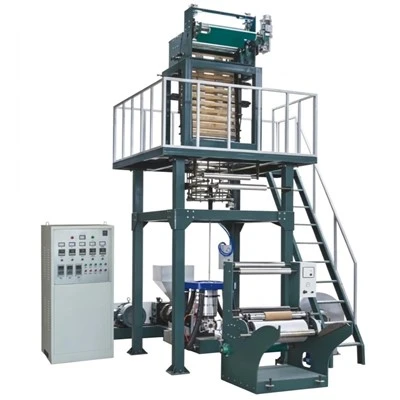
I know this stuff can feel overwhelming if you’re just starting to look into biodegradable packaging. Don’t guess and check with a random resin or machine—reach out to me. I don’t just sell AB machines; I’ve helped 20+ customers switch to biodegradable films over the last 3 years, and I can walk you through exactly what upgrades you need, no sales pitch pressure. If you’ve got a machine already, I can even tell you if it’s compatible with a quick 10-minute chat.
Film Blowing Machine Whether you’re a small startup testing the waters or a big brand scaling up, I’m here to help you figure it out. Don’t waste money on a new machine when you can upgrade the one you’ve got. Hit me up to chat, no obligation—just questions, answers, and maybe a sample of resin to test.
References
- Zhang, Y., et al. (2021). Processing Characteristics of Biodegradable Polymers in Film Blowing Equipment. Journal of Applied Polymer Science, 138(24), 50987.
- European Bioplastics. (2022). Guide to Film Blowing for Biodegradable Packaging.
- American Society for Testing and Materials (ASTM). (2020). Standard Practice for Testing Biodegradable Film Processing Equipment.
Ruian Jianhao Precision Machinery Co., Ltd.
As one of the most professional ab two layer film blowing machine manufacturers and suppliers in China, we’re featured by quality products and good price. Please rest assured to wholesale durable ab two layer film blowing machine for sale here from our factory. Welcome to contact us for customized service and quotation.
Address: No. 8, Jianshe Road, Beiyu Village, Shangwang Street, Ruian City, Wenzhou City, Zhejiang Province
E-mail: 1832333027@qq.com
WebSite: https://www.jianhaomachinery.com/
