If you’ve ever worked with commercial or industrial power systems, odds are you’ve crossed paths with diesel generators—they’re the workhorses of backup power, remote site operations, and critical infrastructure where grid reliability can’t be taken for granted. But here’s a question I get almost every week from new clients, maintenance teams, and even small business owners upgrading their power setups: “My generator runs, but my power factor is low. What does that even mean, and why does it matter for my bottom line?” As a diesel generator supplier who’s sold, installed, and maintained units across construction sites, hospitals, and manufacturing plants for 12 years, I’ve seen firsthand how a poor power factor can eat into profits, shorten equipment life, and even trigger utility penalties I’ve had to help clients avoid. Diesel Generator
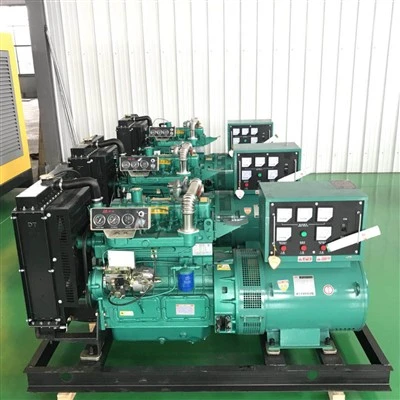
First, let’s break down what power factor actually is, because it’s not just another jargon term to throw around. In electrical terms, power factor (PF) is the ratio of real power (the actual energy that does useful work, measured in kilowatts or kW) to apparent power (the total power drawn from the generator, measured in kilovolt-amperes or kVA). It ranges from 0 to 1; a perfect PF of 1 means all the power supplied is going toward running equipment, while a lower PF means some power is wasted on reactive power—energy that circulates between inductive loads (like motors, transformers, and pumps) and the generator, instead of doing work. For diesel generators, the ideal PF is between 0.8 and 0.9; anything below 0.8 is considered poor, and here’s why that’s a problem.
A generator’s kVA rating is the maximum power it can safely supply, regardless of PF. If your PF drops to 0.7, for example, a 100 kVA generator can only deliver 70 kW of real useful power—even though it’s physically capable of more. That means you’re overpaying for a generator that’s not pulling its weight, or you’re trying to run too much equipment on an undersized unit, forcing it to work harder, burn more fuel, and wear out faster. Utilities also penalize industrial and commercial clients with PF below 0.8 to 0.9, because low PF means the utility has to supply more current to do the same work, wasting energy on their end. I had a client last year who ran a 500 kVA generator for a 6-month construction project with a PF of 0.6; their utility bill included a $12,000 power factor penalty, a cost he never would have faced with a few simple fixes.
Now, the good news: improving a diesel generator’s power factor is almost always achievable with targeted, practical steps—many of which I’ve helped clients implement with minimal downtime or cost. Let’s walk through the most effective methods, tailored specifically to diesel generator setups, not general electrical systems.
First, audit your loads to eliminate unnecessary reactive power. A lot of low PF issues stem from overloaded or outdated electrical equipment that draws unnecessary reactive power. I always tell new clients to start with a load audit, not a quick fix. Walk through every piece of equipment connected to your generator: motors, HVAC systems, lighting, pumps, and any inductive loads. A common culprit is idle or lightly loaded motors—many industrial motors run at 30% or less of their rated load for hours at a time, which drops their PF to 0.4 or lower. If a motor only runs 20% of the time, replacing it with a smaller, appropriately sized unit, or adding a variable frequency drive (VFD) to regulate its speed, can boost its PF significantly. VFDs are a game-changer here, too: they adjust a motor’s power draw to match the actual load, cutting reactive power waste by 30% or more in many cases. I worked with a food processing plant last year that had 12 old 25 hp motors running at half load; replacing half with VFD-equipped 10 hp motors improved their overall site PF from 0.68 to 0.85, and cut their generator’s fuel use by 11% within three months.
Next, install power factor correction (PFC) capacitors. This is the most direct, and most common, fix for low PF in diesel generators. Capacitors supply reactive power locally to inductive loads, so the generator doesn’t have to circulate that unused power through its windings, alternator, and wiring. For small to medium setups (under 1000 kVA), fixed capacitors work well: you calculate your site’s average reactive power demand, then size the capacitors to bring your PF up to 0.9 or higher. For larger, variable load setups (like construction sites with equipment that turns on and off constantly), switched capacitors are better—they adjust the amount of reactive power supplied in real time as loads change, so you don’t overcorrect (which can lead to a PF above 1, another wasteful issue that causes voltage spikes). The key here, and a mistake I see new clients make all the time, is sizing capacitors correctly. Too small, and you won’t fix the problem; too large, and you’ll pay for extra capacity you don’t need, or even damage sensitive electronics connected to the generator. I always recommend working with an electrical technician who specializes in generator systems to audit your load first, so capacitors are sized to your specific setup, not a generic calculation.
Third, optimize your generator’s alternator and operating settings. The alternator is the part of the diesel generator that produces electrical power, and its design and tuning play a huge role in PF. Many older generators are set to run at a lower power factor by default, because that’s how they were calibrated for general use—industrial generators, for example, are often calibrated to handle a PF of 0.8 lagging, but if your site’s average PF is lower, you can adjust the alternator’s excitation system to raise the power factor. Modern digital alternators make this easy: you can input your desired PF, and the system automatically adjusts the voltage and current to supply the right amount of reactive power. I also always advise clients to make sure their generator is running at its rated load whenever possible. Generators are most efficient when they’re operating at 70-85% of their rated load; running them below 50% of load drops their PF, increases fuel consumption, and causes excess carbon buildup in the engine. If your site only uses a small portion of your generator’s capacity, that’s a sign you might have an oversized unit—consider downsizing or adding a modular generator to match your actual load, which will improve both efficiency and PF.
Fourth, maintain your generator regularly to avoid performance degradation. A generator that’s not running properly will have a lower PF, even if your loads are unchanged. Dirty air filters, worn spark plugs (for smaller units), clogged fuel injectors, or a faulty alternator can all reduce the generator’s ability to supply consistent power, leading to reactive power waste. I’ve seen clients skip routine maintenance for years, then wonder why their PF dropped suddenly—turns out, a 10% drop in engine efficiency translated to a 0.15 drop in power factor. A simple maintenance schedule, including weekly load tests, monthly alternator inspections, and annual engine overhauls, will keep your generator operating at its rated PF. For critical applications like hospitals or data centers, we also recommend annual PF audits to catch small issues before they lead to larger problems.
Wait a second—are there any cases where improving power factor isn’t worth it? That’s a question I get, and it’s a fair one. If your generator is only used for occasional backup power, and you don’t face utility penalties, a low PF might not cost you much in fuel or wear. But for most commercial and industrial users, the tradeoff is worth it: a 10% improvement in PF can reduce generator fuel use by 5-8%, extend alternator life by cutting excess current, and avoid utility penalties that can add up quickly. I had a small retail client last year who was hesitant to invest in PFC capacitors because he only ran his generator for 20 hours a month during storms; after a 6-month audit, he found he was being charged a $300/month power factor penalty, so the $1,200 capacitor installation paid for itself in 4 months.
Now, let’s talk about common mistakes to avoid. First, don’t try to correct PF for individual loads without auditing the entire system. Adding a capacitor to a single motor might improve that motor’s PF, but if the rest of your site’s loads are still low, you won’t see a big difference in your generator’s overall PF. Second, don’t overcorrect with capacitors—this leads to a leading power factor, which causes voltage spikes that can damage sensitive electronics like PLCs, servers, or medical equipment. That’s why switched capacitors are better for variable load sites. Third, don’t overlook non-linear loads. Modern equipment like LED lighting, variable speed drives, and inverters draw non-sinusoidal current, which can distort the generator’s output and lower its effective PF. For these loads, adding harmonic filters alongside PFC capacitors is often necessary—something I’ll always recommend for sites with a lot of digital or sensitive equipment.
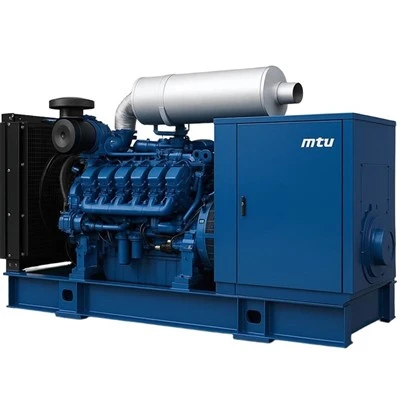
As a diesel generator supplier, I’ve seen first-hand how even a small improvement in power factor can make a huge difference for a client’s bottom line and operational reliability. That’s why we don’t just sell generators—we work with clients to audit their existing systems, identify PF issues, and recommend targeted fixes that fit their budget, not a one-size-fits-all solution. If you’re noticing high fuel costs, utility penalties, or equipment wear that you can’t trace, chances are a low power factor is part of the problem. We can help you run a free, no-obligation power factor audit to assess your current setup, identify opportunities for improvement, and recommend solutions that work for your specific needs. Contact us to discuss your diesel generator power factor concerns and find the right solution for your business.
Diesel Generator References
- Miller, T. J. E. (2008). Alternative Current Motors: Their Behavior and Analysis. John Wiley & Sons.
- National Electrical Manufacturers Association (NEMA). (2016). Standard for Diesel Engine Generators for Stationary Use. NEMA Publication MG 1-2016.
- International Electrotechnical Commission (IEC). (2019). Standard for Power Factor Correction in Industrial Low-Voltage Systems. IEC 61831-1.
- Diesel Technology Forum. (2021). “Efficiency Benefits of Power Factor Optimization for Industrial Generator Sets.” Technical Brief, Diesel Technology Association.
- Occupational Safety and Health Administration (OSHA). (2020). “Electrical Power Quality for Commercial Generator Systems.” OSHA Safety Brief 3898-12-2020.
Weifang Bofa Power Equipment Co., Ltd.
We’re well-known as one of the best diesel generator suppliers in China. With a professional production team, we are able to meet the needs of the majority of our customers. Please feel free to buy cheap diesel generator for sale here from our factory. For price consultation, contact us.
Address: Lianhuachi Village, Fangcheng Street Office, Fangzi District, Weifang City, Shandong Province.
E-mail: sales@wfbofapower.com
WebSite: https://www.wfbfgenset.com/
