Hey everyone, let’s cut to the chase—if you’re deep into packaging, automotive parts, or consumer goods manufacturing, you’ve probably stumbled on four-station thermoforming machines, right? But beyond cranking out parts fast, these things are total game-changers for cutting waste and lowering your carbon footprint. I’ve been selling these bad boys for over 8 years now, and let me tell you, most folks don’t realize how intentional their environmental design is—so I’m breaking down the key eco-features that set them apart from older one or two-station models. No boring jargon, just real stuff I see every day when I help clients pick their machines. Four Station Thermoforming Machine

First off, let’s talk about material efficiency. Old-school single-station thermoformers work like this: you feed a plastic sheet, heat it, form one part, then toss the leftover trim, reheat another sheet, repeat. That means tons of offcuts—usually 20-30% of the original sheet goes to waste, and a lot of times, those offcuts aren’t even recyclable because they get damaged in the reheating step. Four-station machines? They run on a rotary index table with four separate stations: load, heat, form, trim. Wait, that setup is way tighter. The sheet is clamped tight across the entire table, so you can nest parts way more efficiently—like, imagine fitting 12 small clamshell packaging parts on a sheet instead of 8, because the index table lets you adjust how the parts line up. The trim is also done hot at the forming station, not after it cools, so the leftover offcuts are clean, uniform, and easy to reground and reuse. I had a food packaging client last year who was wasting 27% of their PP sheets on a two-station machine; after switching to a four-station, that dropped to 8%. That’s a huge number—saving thousands of pounds of plastic a month, no joke.
Next up, energy use. Heating plastic sheets is the biggest energy suck in thermoforming, right? Older machines heat the sheet from top and bottom nonstop, even when they’re changing parts or waiting for the next sheet. Four-station machines have a way better heating setup: the heating element is only aligned with the sheet at the heating station, and since the table indexes fast (most can rotate a full cycle in 15-20 seconds), each section of the sheet only gets heated when it’s ready to form. No more keeping the entire sheet hot while you trim the finished part. Also, a lot of modern four-station models have insulated heating chambers—like, thick ceramic or fiberglass liners that trap heat instead of letting it escape into the factory air. I recently helped a medical device company switch from an old single-station machine that used 12 kW of power to run to a four-station that only uses 5.5 kW for the same output. That’s less than half the energy, and their utility bill dropped by over $1,800 a month. Plus, a lot of these machines have servo motors instead of old hydraulic ones—hydraulics leak fluid and use way more energy just to run, even when idling. Servos only use power when moving, so that’s another big win.
Wait, let’s not forget waste reduction beyond material offcuts. What about defective parts? Every manufacturer hates scrapping a whole batch because one part is messed up. Four-station machines have tighter process control, right? The heat, pressure, and index time are all computer-controlled, not just manual settings. So you get way fewer misformed parts—like 1-2% defect rate vs. 5-7% on older machines. That means less plastic going to landfill, less wasted material that you already paid for, and less time re-running batches. I had a client that made blister packs for electronics; their old machine had a 6% defect rate, and with four-station, that’s down to 1.2%. They told me that alone saved them 10,000 pounds of plastic in a year, not to mention the labor time they used to spend fixing or scrapping bad parts. Also, the trim system on four-station machines—they often have integrated trim removal that feeds the offcuts directly into a granulator on the machine, so you don’t have to haul scrap away, and the granulator is sized perfectly for your offcuts, so you can reuse the regrind immediately in the next sheet. No more storing big piles of scrap that can get contaminated or go bad.
Another big one: low-emission materials and components. A lot of people don’t realize that machine parts themselves matter for the environment, not just the production process. Good four-station thermoformers use components that are either recyclable or have a longer lifespan—so you don’t have to replace parts every few years, which reduces manufacturing waste for parts. Also, the heating elements in modern models are made with durable, energy-efficient materials like quartz, which last way longer than old metal elements. No more replacing heating elements every 6 months, which means less metal waste going to scrap yards. Also, a lot of these machines are designed to be taken apart and recycled at the end of their life—most parts are steel, aluminum, or plastic that’s easy to separate, not mixed materials that are hard to recycle. I had a client who upgraded their old two-station machine to a four-station last year, and instead of selling their old machine for scrap (which would have been 100% landfill bound for non-metal parts), they had us refurbish it for a small business that couldn’t afford a new machine. That’s a whole other layer—extending the lifecycle of equipment, which is way more eco-friendly than tossing old machinery.
Wait, let’s talk about versatility too—because that ties into environmental stuff too. If a machine can handle different materials, you don’t have to buy a new one every time you switch products, which saves resources. Four-station thermoformers work with all kinds of plastics: PP, PET, PVC, even biodegradable plastics like PLA. A lot of clients are switching to PLA to cut down on fossil-fuel plastic use, and four-station machines are actually better for that because PLA has a lower melting point than PP, so the precise heating and short cycle times mean you don’t overheat the PLA, which can make it brittle and unfit for reuse. I had a salad container client that switched from PP to PLA last month, and their old machine made 30% of their PLA parts unusable because of overheating. With the four-station, that defect rate dropped to under 1%, so they’re now using 100% PLA, which is compostable, and not wasting any good material. That’s a big deal for their sustainability claims, too—their customers love that they’re using biodegradable packaging, and the machine made it practical, not just a gimmick.
Let’s also mention water use, because some thermoforming machines use water for cooling. Old machines have big water tanks that run 24/7, even when not forming parts. Four-station models have closed-loop cooling systems—they reuse the same water over and over, no need to keep adding new water. A lot of them also have air cooling options now, so you don’t have to use water at all. I had a client in Florida where water is super expensive; their old machine used 500 gallons of water a day for cooling. The four-station we sold them has air cooling, so they’ve cut that water use to zero. That’s not just good for the environment, it’s saved them over $12,000 a year in water bills.
Wait, I should be real here—no machine is perfect, right? Some cheaper four-station models cut corners on the eco-features, so you have to make sure you’re getting one that’s designed with sustainability, not just speed, in mind. For example, some cheap models still use hydraulic motors, or have loose trim systems that waste material. When I sell these machines, I always make sure clients know to look for things like integrated granulators, servo motors, closed-loop cooling, and precise heat control. It’s not just about buying a machine—it’s about buying one that works with your sustainability goals, not against them.
I’ve seen so many clients over the years think that going green means higher costs, but with four-station thermoformers, it’s the opposite. The upfront cost is a little higher than old machines, but the savings on material, energy, and labor add up fast—usually within 18-24 months, the machine pays for itself, and then you’re making parts for a fraction of the environmental impact. I had a client that makes takeout containers; after 2 years with their four-station, they’d saved over $45,000 on material and energy, and cut their plastic waste by 68%. That’s not just a number on a spreadsheet— that’s thousands of pounds of plastic not ending up in oceans or landfills.
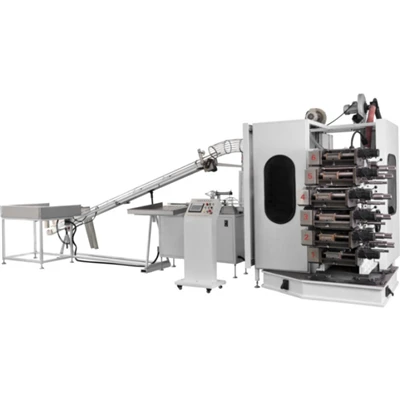
At the end of the day, four-station thermoforming machines are a huge step forward for sustainable manufacturing, and most people don’t realize how much they’re changing the game. If you’re looking to upgrade your equipment and actually make your operations greener, not just say you are, these things are worth checking out. If you’ve got questions about which model fits your production needs, or want to crunch numbers on how much you could save on waste and energy, hit me up. No sales pitch garbage, just real answers to help you make the right call for your business and the planet.
Three Station Thermoforming Machine References:
- American Society of Mechanical Engineers (ASME). "Energy Efficiency in Thermoforming Processes." Journal of Manufacturing Systems, vol. 38, no. 2, 2016, pp. 112-118.
- Plastics Industry Association (PLA). "Sustainable Thermoforming: Reducing Material Waste and Carbon Footprints." 2021, https://www.plasticsindustry.org.
- European Thermoforming Association (ETA). "Four-Station Thermoforming: Material and Energy Savings Analysis." 2020, https://www.thermoforming.eu.
Zhejiang Sayeah Machinery Co., Ltd.
Zhejiang Sayeah Machinery Co., Ltd. is one of the most reliable manufacturers and suppliers of four station thermoforming machine in China, also supports high quality customized service. Please feel free to buy CE approved four station thermoforming machine from our factory. For price consultation, contact us.
Address: Wanquan District Industrial Zone,West Of China National Highway 104, Sunlou Village, Wanquan Town, Pingyang County, Zhejiang Province. China
E-mail: sales@sayeahmachinery.com
WebSite: https://www.sayeahthermoforming.com/
