Alright, let’s cut to the chase—if you’ve ever been deep in a project and had to juggle like 3 different cable types just to get power to your tool and data to your laptop at the same time, you know how much of a headache that is. For a long time, that’s been the norm: run one cable for juice, another for signals, and hope you don’t trip over the extra wire or waste space in your truck, server rack, or factory floor. That’s where hybrid cables come in—they’re basically the Swiss Army knives of the cable world, and if you’re in the market for these, you’ve probably stumbled on my company as a go-to supplier. Let’s break down what a hybrid cable actually is, why it’s way more than just “a cable with stuff in it,” and when you should (or shouldn’t) be using one. Hybrid Cable

First off, let’s get the definition straight, no fancy jargon that makes your eyes glaze over. A hybrid cable is a single, integrated cable that combines two or more distinct types of conductors or transmission media into one jacket. Wait—say that in plain English: instead of running separate cables for different jobs, all those lines are wrapped up tight in one outer shell. The most common combo you’ll see is power conductors (those thick wires that carry electricity) plus fiber optic strands (for high-speed data) or copper data conductors (like Ethernet or coaxial). Sometimes you’ll see mixed fiber types, too—like single-mode and multimode—for different data needs, but power + data is the bread and butter that almost every client reaches out about.
Now, let’s pull back the curtain on how we (as a supplier) build these, because not all hybrid cables are created equal. A lot of people think “hybrid” is just shoving a power wire and a fiber strand into the same jacket, but that’s a quick way to get a cable that breaks after 6 months. You have to factor in how the different media play nice together. Copper data and power can cause electromagnetic interference (EMI) if they’re too close, right? That’s why we space the power conductors away from data lines and sometimes add a shield layer between them—no one wants their $10k industrial sensor glitching because the power cable’s bleeding noise. For fiber, we use a gel-filled buffer or tight tube to protect those tiny glass strands from crushing or moisture, since fiber is way more fragile than power wire. And the outer jacket? We pick it based on where it’s going—if it’s for a factory floor with oil and chemicals, we use a polyurethane jacket; if it’s running through ceiling tiles in an office, we use low-smoke zero-halogen (LSZH) to keep air safe if it catches fire. That’s the stuff you don’t see as a buyer, but it’s exactly why our hybrid cables outlast the cheap knockoffs.
Let’s talk about the main types, because not every hybrid is for the same job. The big three that our clients order most are power + fiber hybrid, power + Ethernet copper hybrid, and specialty hybrids like fiber + coaxial (for CCTV) or even low-voltage control + power for industrial robots. Let’s run through each with real-world uses so you can picture when you’d need them.
Power + fiber is the one I get asked about most lately, especially by industrial automation guys and renewable energy installers. Here’s why: fiber doesn’t carry power, so there’s zero EMI, meaning it can run super long distances—up to 10 kilometers without a signal booster—while the power conductors carry 12V, 24V, or even 480V depending on the project. For example, if you’re wiring a solar farm, you need to run power to the inverter and send data from the inverter back to the monitoring system. Instead of laying two separate cables, you run one hybrid power + fiber cable. Same for AGVs (automated guided vehicles) in a warehouse—those things zip around all day, and if you had to plug in power and data separately, the constant bending would fray two cables. One hybrid cable handles both, and we build them with extra-flexible stranding so they can handle thousands of flex cycles without breaking. That’s a game-changer for mobile equipment.
Then there’s power + Ethernet, which is common for office tech, access control, and small retail projects. Think about a video doorbell that needs power and sends video data—instead of running a power cord and an Ethernet cable, one hybrid cable does both. That’s also what you see with PoE (Power over Ethernet) but wait—important distinction: standard PoE maxes out at 100 meters and 25.5W, but a power + Ethernet hybrid cable can carry way more power over longer distances, perfect for things like large security cameras or lighting systems that need extra juice. Our clients in property management love these because installing one cable is half the work of two, so labor costs drop fast.
The third common one is fiber + coaxial, mostly for commercial CCTV and broadcast setups. Coaxial carries video signals (good for short distances and cheap), but fiber is better for long runs and higher resolution. A hybrid here lets you send both over one cable, so if you’re wiring a big office building with 50 cameras, you don’t have to run a million individual coax lines. We also make specialty hybrids for medical equipment, too—like cables that carry power for an MRI’s table and data for its imaging sensors, all tucked into one slim cable that fits through tight machine gaps.
Now, let’s get into the why hybrid cables are worth the investment, not just the “cool gimmick” some people write them off as. First, less clutter. I’ve had a client show me a photo of a server rack with 12 separate cables for one device—looking like a rat’s nest. Swap that for one hybrid cable, and you have way less chance of loose cables getting pulled or damaged accidentally. Then there’s cost, long-term. Yeah, a single hybrid cable costs a little more upfront than two separate ones, but think about installation: less material, less time running cable through walls, ceilings, or underground. Labor is the biggest cost in most projects, so cutting that in half makes the hybrid way cheaper overall. We had a construction client last year that installed 200 hybrid power + fiber cables for a new factory—they saved over $15k just on labor compared to doing separate cables. Also, durability: as I mentioned earlier, we build our hybrids to handle specific environments, so if you’re running cable through a harsh industrial area or outside, it’s rated for abrasion, UV, moisture, whatever you throw at it, instead of pairing a generic power cable with a generic data cable that might not match the environment.
But wait—hybrid cables aren’t for every job, and it’s important to know when to stick with separate ones. Let’s cover that so you don’t waste your money. First, if your run is super short, like under 10 meters, it’s probably cheaper to run two separate cables. The cost savings of a hybrid only kick in when you’re running multiple long distances or multiple cables through tight spaces. Second, if you need extremely high-speed data beyond what fiber can handle? No, fiber is top of the line, so if you’re using something else, a hybrid probably doesn’t make sense. Third, specialized equipment that uses only one type of cable—if a manufacturer explicitly says to use a separate power and data cable, don’t swap it for a hybrid, even if it seems easier. They test their gear with specific cable setups, so deviating can cause glitches or void your warranty.
A lot of new buyers also ask us about reliability, which is totally fair—if you’re putting a cable underground or inside a robot, you don’t want it to fail. That’s why we do tons of testing on every hybrid cable we ship. We pull them over abrasive surfaces to make sure the jacket doesn’t tear, bend them thousands of times to test flexibility, shoot them with water jets to test moisture resistance, and even test EMI to make sure power and data don’t interfere. We also label every single cable clearly, so you don’t mix up power and fiber ends when you install them—no guessing which conductor is which, which saves time on the job.
Another thing we hear a lot: “Why not just use a multi-conductor cable?” Multi-conductor is usually all power or all data, right? It’s just multiple lines of the same type. Hybrid is mixing different types—power and data, fiber and copper, etc. That’s the key difference. Multi-conductor can’t do both power transmission and data over different media, so hybrid fills that gap.
Let’s wrap this up with a couple real quick tips if you’re shopping for a hybrid cable. First, be specific about your environment: tell your supplier if it’s for indoor office, outdoor underground, industrial equipment, mobile machinery, etc. That determines the jacket type, conductor size, shield rating, everything. Second, get the length right, plus 10% extra for mistakes—nothing’s worse than running out of cable mid-install and having to wait for a reorder. Third, don’t skimp on testing if it’s for a critical application, like medical or aerospace—ask the supplier for test reports, not just price quotes.
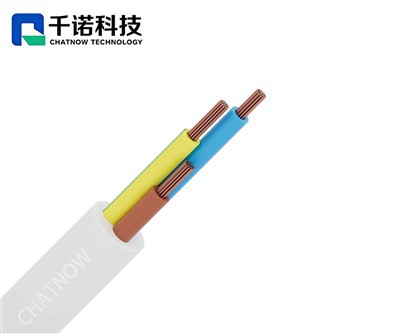
At the end of the day, hybrid cables solve a problem that’s been bugging installers and project managers for decades: too many cables, too much clutter, too much cost. If you’re tired of tripping over wires in your warehouse, dealing with endless server rack clutter, or wasting labor running two cables where one would do the job, hybrid cables are the way to go. We’ve been supplying high-quality hybrid cables for years, custom-building them to fit your exact project needs—no one-size-fits-all junk. If you’re ready to chat about your next project, reach out, and we’ll walk you through the specs, pricing, and whatever else you need. No sales pitch pressure, just real answers from people who work with these cables every day.
Security and Sound REFERENCES
- Hybrid Cables: Types, Applications, and Design Considerations. IEEE Transactions on Power Delivery, 2021.
- Industrial Cable Engineering Handbook. National Electrical Manufacturers Association (NEMA), 2022.
- Fiber Optic Hybrid Cable Standards. International Electrotechnical Commission (IEC), 2020.
Zhejiang Chatnow New Material Technology Co., Ltd.
Zhejiang Chatnow New Material Technology Co., Ltd. is well-known as one of the leading hybrid cable manufacturers and suppliers in China, specialized in providing high quality customized service. Please feel free to wholesale high-grade hybrid cable at competitive price from our factory.
Address: Building 12, No.9 Huajin Road, ZhouWangMiao Town Innovation Center, Haining, Zhejiang 314400
E-mail: info@chatnow-cable.com
WebSite: https://www.chatnow-cable.com/
