If you’ve ever spent time around mineral processing labs or flotation plants, you’ve probably heard someone mutter about hydroxamic acid collectors—those weird, somewhat finicky chemicals that make copper, rare earth, and even some non-metallic minerals actually stick to bubbles. As a supplier who’s been geeking out on these things for the last 12 years, I’ve lost count of how many times a mining operator has called me panicking: “Our flotation recovery just dropped 15%—what’s wrong?” Nine times out of 10, the culprit isn’t the collector itself, it’s the size of the hydroxamic acid particles they’re using. Yeah, I know, particle size sounds like super boring lab jargon, but trust me—it’s the unsung hero that makes these collectors work (or fail spectacularly). Let’s break this down like we’re chatting over a coffee after a long day at a plant, no stuffy textbook talk, I promise. Hydroxamic Acid Collectors
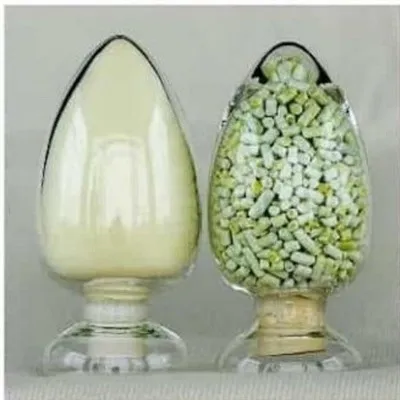
First off, let’s get one thing straight: hydroxamic acids aren’t just one-size-fits-all powders you dump into a tank. Most of the ones we supply are synthetic, made to bind specifically to metal ions on mineral surfaces—think the copper in chalcopyrite, the rare earths in monazite, even the tin in cassiterite. But if you grind that collector down to tiny particles vs. leaving them as bigger chunks, every single part of their performance shifts. It’s not like a smaller particle is always better, either—way too many people think “tiny = more surface area = better” and go overboard, only to end up with a bigger mess. Let’s start with the basics that every operator needs to remember, even if you’re not a chem major.
Surface area is the big one here. If you take a 1 gram chunk of hydroxamic acid that’s 100 micrometers across (that’s like the size of a grain of fine sand you might see on a beach), its total surface area is maybe 0.02 square meters. Now, crush that same gram into particles that are 1 micrometer across—way smaller, like a red blood cell—its surface area jumps to 2 square meters. Wait, that’s 100 times more surface area! Why does that matter? Because for a collector to work, it has to stick to both the mineral surface and the air bubble in the flotation cell to carry the mineral out. If the collector particles have way more surface area, there’s more “active sites” to bind to the metal ions on the mineral. At least, that’s the theory. But here’s the catch: that tiny surface area only translates to better performance if the particles can actually dissolve or disperse evenly in the pulp (the slurry of ground mineral and water in the flotation tank). If you go too small—like sub-micrometer particles—they tend to clump together, right? That’s called agglomeration. It’s like pouring a bag of baby powder vs. a bag of sand: the powder sticks to itself so you can’t get even coverage. I’ve seen operators test a 95% fine collector, mix it, and end up with a gooey mess at the bottom of the tank that did nothing for their recovery. So particle size isn’t just about surface area—it’s about getting those small particles to stay separate and spread out.
Next up: dissolution rate. Hydroxamic acids aren’t super soluble in water, especially at neutral pH, which is what most mines use to cut costs (why would you add more acid or base when you don’t have to?). The rate at which they dissolve directly depends on their size. Bigger particles take forever to dissolve—like, I’m talking 10 to 15 minutes for a 100 micrometer particle in a standard flotation pulp. That means when you add the collector to the tank, the big chunks sit there doing nothing until they slowly dissolve, which is way too slow for most flotation cycles (which are 2 to 5 minutes max). By the time they’re actually binding to minerals, the bubbles have already floated out most of the valuable ore. On the flip side, a 10 micrometer particle? It dissolves in less than 2 minutes. That’s perfect— it’s available to bind to minerals right when they’re in the tank, so you get more collector-mineral complexes before the bubbles pass through. But wait, I’ve also seen a 1 micrometer collector that dissolved in 30 seconds, but it was so prone to agglomerating that 70% of it was useless before it could bind. So dissolution rate is a balance, not a race to the fastest.
Then there’s selectivity—this is the holy grail for collectors, right? You don’t want your collector binding to every single mineral in the tank, just the valuable ones. Too many operators fixate on recovery, but if your selectivity is garbage, you end up with a concentrate that’s full of waste rock, which means you have to spend more money reprocessing it or you lose money when you sell it. How does particle size affect selectivity? Let me tell you a quick story: a client in Australia was having a huge problem with their rare earth concentrate having too much thorium, a radioactive waste metal. They were using a hydroxamic acid that was 50 micrometers, and it was binding to both the rare earths and the thorium. When they switched to our 8 micrometer grade, their thorium levels dropped by 40% without losing a single point of rare earth recovery. Why? Smaller collector particles don’t bind as strongly to the larger, less abundant metal ions like thorium, because they’re more dispersed and only stick to the most reactive, high-density metal sites. The bigger 50 micrometer particles were so bulky that they’d stick to almost any metal ion they touched, even the ones they didn’t want. That’s a big win—selectivity isn’t just about the chemical structure of the collector, it’s about how well you size it.
Now, let’s talk about something that hits pocketbooks: dosage. If you’re using the wrong particle size, you’re either wasting money on too much collector or losing money on low recovery. Let’s do the math. A plant that processes 10,000 tons of ore per day might use 500 kg of hydroxamic acid per month if they use 50 micrometer particles. If they switch to an optimized 8 micrometer size, they only need 300 kg per month to get the same recovery. That’s 200 kg per month in savings, plus the time they don’t have to deal with the mess of over-sized or under-sized particles. Another client in Canada was using super fine 1 micrometer particles because they thought “smaller = better,” but they had to add 20% more collector to make up for the agglomeration. When we adjusted their size to 12 micrometers, they cut their dosage by 15% and got a 7% boost in recovery—all because they stopped wasting collector on clumps that did nothing. It’s basic supply and demand, but applied to tiny chemical particles: if they’re not dispersed right, you need more to get the same effect.
Wait, I can’t not mention the role of pulp chemistry here, because particle size doesn’t work in a vacuum. If a mine is operating at a low pH (like 5.5) vs. a high pH (like 9), the ideal particle size shifts. At high pH, hydroxamic acids are more soluble, so you can get away with slightly bigger particles (15-20 micrometers) because they don’t take as long to dissolve. At low pH, they’re less soluble, so you need smaller particles (6-10 micrometers) to get enough dissolution before the flotation cycle ends. I had a client in South America that was running at pH 5.8 and using a 15 micrometer collector, which worked fine, but when they adjusted their flotation pH to 6.5 to save on acid costs, their recovery dropped 10%. Switching to a 9 micrometer collector fixed it immediately—smaller particles dissolved enough even at the slightly higher pH, so they saved on acid and got their recovery back. That’s the thing, particle size is a variable that works with pH, not against it. You can’t just pick a size and expect it to work forever; you have to adjust it based on the rest of your process.
Now, let’s get real about common mistakes I see all the time. First, people think “all fine particles are the same.” No way. We make our fine grades with a narrow size distribution—meaning almost all the particles are within 2 micrometers of the target size, not a mix of 1 and 20 micrometers. If you have a mix of sizes, you get the worst of both worlds: the tiny ones agglomerate, the big ones dissolve too slow. Second, people don’t test particle size before switching collectors. I can’t tell you how many times a client has called me after buying a cheap hydroxamic acid from a random supplier, only to find out their particles are 100 micrometers, which is way too big for their small flotation cells. Third, they ignore storage conditions. If you leave fine hydroxamic acid in a damp silo for more than a month, it will absorb moisture and start agglomerating, so your particle size is no longer what you bought. That’s a user error, but it’s directly tied to how the particle size behaves in real-world operations.
So, what’s the takeaway here? Particle size isn’t a trivial lab detail—it’s one of the most impactful variables in how your hydroxamic acid collector performs. Too big, and you get slow dissolution, bad selectivity, wasted collector. Too small, and you get agglomeration, uneven mixing, wasted collector. The sweet spot? It depends on your mineral type, flotation cycle time, pH, and even your equipment. For copper flotation, that’s usually 8-15 micrometers. For rare earths, it’s 6-10 micrometers. For tin, it’s 10-18 micrometers. But that’s just a baseline—you should always run a small-scale test first to dial it in.
If you’re here because you’re dealing with wonky flotation recovery, high concentrate waste, or just want to stop wasting money on hydroxamic acid collectors, I can help. We don’t sell one-size-fits-all hydroxamic acids—we tailor the particle size distribution to your exact process, whether you’re processing copper, rare earths, tin, or anything else. We’ve got lab testing kits you can use to run quick size and performance tests, and our team has worked with mines on 4 continents to tweak their collector particle sizes for better results and lower costs. No guesswork, no overpriced “premium” collectors, just a data-backed approach to making your flotation work better. If you’re tired of playing roulette with hydroxamic acid particle sizes, get in touch to set up a chat about your specific operation.
Dithiocarbamate Collectors References
- Fuerstenau, D.W., 2004. The role of hydroxamic acid collectors in mineral flotation. International Journal of Mineral Processing, 74(1-4), pp.1-18.
- Moudgil, B.M., Soto-Sanchez, J., 2010. Particle size effects on collector performance in flotation. Minerals Engineering, 23(12), pp.957-962.
- Li, L., et al., 2018. Selective flotation of rare earth minerals using size-controlled hydroxamic acid collectors. Journal of Colloid and Interface Science, 512, pp.789-797.
- Rao, K.H., Forssberg, E., 2006. Effect of particle size on collector adsorption and flotation performance. International Journal of Mineral Processing, 80(2-4), pp.187-200.
Bitop Bihope Qingdao Mining Co., Ltd
Bitop Bihope Qingdao Mining Co., Ltd. is one of the most professional hydroxamic acid manufacturers and suppliers in China, featured by quality products and low price. Please rest assured to buy discount hydroxamic acid in stock here and get quotation from our factory. Customized orders are welcome.
Address: Room 410, 4th Floor, Shengquan Business Building, No. 263 Yitong Road, Huangdao District, Qingdao City, Shandong Province, China
E-mail: btbhmining@163.com
WebSite: https://www.btbhmining.com/
