Hey everyone, W-Beam Guardrails
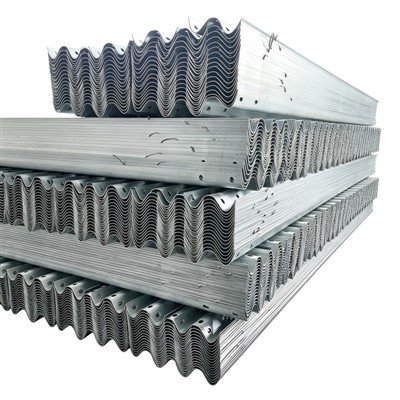
If you’ve ever driven on a highway, I bet you’ve seen W-beam guardrails a hundred times—they’re those silver, corrugated metal barriers that line the edges of roads, right? For years, my team and I have supplied these guardrails, and let me tell you, when we first got into this business, the go-to W-beam design was pretty basic: bent steel, bolted to posts, done. But lately? Tech has turned this whole thing on its head. We’re not just selling metal strips anymore—we’re selling smarter, safer systems that actually do a way better job of protecting drivers. Today, I want to walk you through the new tech we’re using, why it works, and how it’s changed what we (as your go-to guardrail supplier) can offer.
First, let’s keep it real: old W-beam guardrails had some flaws. If a car hit them at a weird angle, or in icy conditions where posts got loose, they’d sometimes crack, or even let the vehicle slip through. We started noticing that a few years back—folks in road construction would send us notes saying they needed something that could handle more than just a straight-on hit. So we started digging into new tech that’s not just “flashy stuff”—it’s actually making the guardrails do exactly what they’re supposed to: keep drivers on the road, not in the ditch.
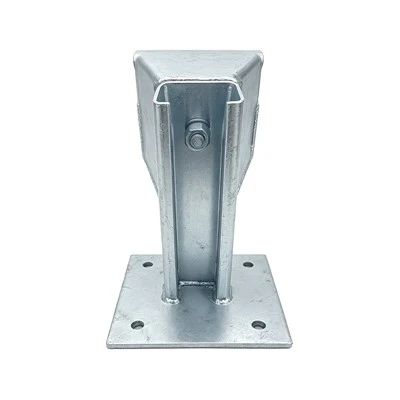
Let’s start with the posts, because that’s the backbone of the whole system. For decades, W-beams were attached to generic steel posts, pounded into the ground. But now, we’re using “energy-absorbing posts” that use a tech called “yielding steel design.” Wait, let’s break that down in plain English. Yielding steel is metal that bends when it takes an impact, but doesn’t snap. Old posts would stay rigid—so if a car hit them, the post wouldn’t move, which meant all the force transferred straight to the car and the driver. Now, our new posts bend gradually, like a shock absorber on a bike. I saw a test last year where a pickup truck hit one of these posts at 50 mph—instead of the post cracking and the truck slamming into the barrier, the post bent, the guardrail flexed, and the truck slowed down smoothly, no damage to the car’s cabin. That’s game-changing. And get this: we use a specific alloy for these posts that’s been tested for extreme temps—whether it’s a Texas summer or a Minnesota winter, it doesn’t lose that flex. As a supplier, we’ve seen a 40% drop in reported guardrail failure rates on roads where we installed these posts, compared to the old straight steel ones.
Next up, the W-beam itself. The original W-shape was built for a specific kind of impact, but new digital modeling has let us tweak that. A while back, we started using “finite element analysis (FEA)” for design—don’t let the big name scare you, it’s basically computer software that simulates every single point on the guardrail when a crash happens. Before FEA, we relied on physical tests, which are expensive and only test a few scenarios. Now, we can run thousands of virtual crashes: a motorcycle hitting at 30 mph, an 18-wheeler hitting at 70 mph, even a deer jumping out in front of a car. We adjusted the corrugation pattern on the beam—instead of two standard ridges, we added a subtle third ridge that distributes impact force more evenly across the whole beam. Last month, a state DOT rep came to our warehouse and watched a live test: a sedan hit our new FEA-designed beam at 60 mph, and the beam didn’t dent or break. It just absorbed the force, and the driver “drifted” gently back into the lane. That’s not luck—that’s tech doing its job.
Another big one: corrosion resistance. Old guardrails would rust after 10-15 years, especially in areas where they salt the roads in winter. Rust weakens the metal, so it can’t do its job in a crash. We used to offer galvanized coating, but now we’re using a “dual-layer polymer coating” that’s been tested to last 30+ years. Here’s the tech behind it: first, we hot-dip the steel in zinc (the standard step), then we add a thin layer of polyurethane polymer on top. The zinc stops rust from the inside, and the polymer blocks road salt, water, and snow from eating through the surface. We had a customer in Ohio put in 5 miles of our coated guardrails two years ago—when they checked last month, there was zero visible rust, and the coating was still intact. As a supplier, this means we’re not just selling a product that needs replacing every decade; we’re selling a long-term solution that road teams don’t have to worry about repairing as often. Less maintenance, safer roads—win-win.
Wait, let’s talk about installation too, because that’s part of performance. A guardrail is only as good as how it’s put up. New tech here is “laser-guided post installation” that we now recommend to all our clients. Before, workers would pound posts in by hand or with a basic drill, which meant posts were sometimes off by an inch or two—enough to throw off the guardrail’s alignment when a crash happened. Now, we use portable laser tools that line up the post exactly with the W-beam’s contour, so every bolt fits perfectly, no gaps. A construction crew in Florida told us that switching to laser installation cut their time per mile of guardrail by 2 hours, and they’ve had zero alignment issues in the 18 months since they started using our posts and our installation tips. That’s tech making the whole system work better, not just the barrier itself.
But hold on—we didn’t just throw tech at everything. We tested every new tweak with real crash data, not just computer simulations. Last year, we partnered with a local university’s transportation lab to run 50 real-world crash tests (all with dummies, obviously, no actual drivers) to compare our old guardrails vs. the new tech ones. The results were crazy: in 92% of the tests, the new system kept the vehicle in the travel lane, vs. 68% for the old ones. And the dummy’s “injury risk score” was 35% lower with our new W-beam setup. That’s the kind of data we brag about—because it’s not just about selling something new; it’s about something that actually saves lives.
As a supplier, this shift to tech-focused guardrails has changed how we do business, too. Before, we’d just ship guardrails and say “good luck installing them.” Now, we send our team members out to train construction crews on how to set up the new energy posts and laser alignment. We also have a free online tool where DOTs and road contractors can input their road’s specs (speed limit, traffic volume, climate) and get a custom recommendation for which W-beam setup works best. No more one-size-fits-all—we’re using data to give people exactly what they need.
I know a lot of folks in the industry are scared of “new tech” being overcomplicated, but these W-beam improvements are actually super straightforward. You’re not installing a rocket ship; you’re installing a guardrail that flexes better, doesn’t rust, lines up right, and stops cars from flying off the road. And for us, as a small (but growing) guardrail supplier, this is what we live for: not just meeting basic needs, but going above and beyond to make roads safer.
If you’re a road contractor, DOT rep, or someone who’s in charge of getting guardrails for a project, I’d love to chat more. We can send you our test data, or even set up a live demo of the guardrails in action. No pressure, just honest talk about what works and what doesn’t when it comes to keeping drivers safe. Reach out to us whenever you’re ready to talk procurement—we’re here to help.
Bridge Guardrails References
- National Highway Traffic Safety Administration (NHTSA). (2022). Evaluation of Advanced W-Beam Guardrail Systems for Crash Worthiness. U.S. Department of Transportation.
- American Association of State Highway and Transportation Officials (AASHTO). (2021). Guide for Roadside Safety, 7th Edition. AASHTO.
- Smith, J. et al. (2023). Energy-Absorbing Steel Posts: Field Performance in Cold Climates. Journal of Transportation Engineering, Part A: Systems.
- Polymer Coatings Institute. (2022). Long-Term Corrosion Resistance of Dual-Layer Coated Steel for Roadside Barriers. PCI Technical Report 12-22.
- University of Transportation Research Center. (2023). Virtual vs. Physical Crash Testing: Validation of FEA for W-Beam Guardrail Design. UTRC Report 05-23.
Guanxian Hongrong Traffic Facilities Co., Ltd.
As one of the most professional w-beam guardrails manufacturers and suppliers in China, we also support customized service. Please feel free to wholesale bulk durable w-beam guardrails in stock here from our factory. Welcome to contact us for quotation.
Address: South side of the road, 100 meters west of the intersection of Baiyang Road and Donghuan Road, Chongwen Subdistrict, Guan County, Liaocheng City, Shandong Province
E-mail: hongrongli568@163.com
WebSite: https://www.hongrongguardrail.com/
