Hey there! As a supplier of Secondary Injection Relay Test Sets, I often get asked about the phase accuracy of the test signals these devices produce. So, I thought I’d take a few minutes to break it down for you. Secondary Injection Relay Test Set
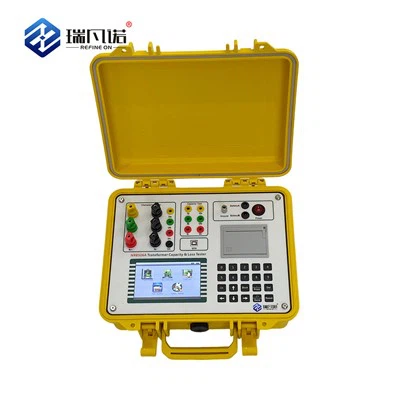
First off, let’s talk about what a Secondary Injection Relay Test Set is. In simple terms, it’s a piece of equipment used to test protective relays. Protective relays are crucial components in electrical power systems. They’re designed to detect faults, like short – circuits or overloads, and then initiate the appropriate action to isolate the faulty part of the system. This helps prevent damage to equipment, reduces the risk of electrical fires, and ensures the overall reliability of the power grid.
Now, the phase accuracy of the test signals in a Secondary Injection Relay Test Set is super important. Phase accuracy refers to how closely the phase angle of the test signal matches the intended or theoretical phase angle. In an ideal world, the test signal should have exactly the same phase angle as the one specified for the test.
Why is phase accuracy so crucial? Well, protective relays are designed to operate based on the phase relationships between different electrical quantities, such as voltage and current. For example, in a three – phase power system, the phase difference between the three phases is typically 120 degrees. If the test signals from the relay test set don’t have the correct phase angles, the relay might not respond as it should during the test. This could lead to false results, where a relay that’s actually working fine might be misdiagnosed as faulty, or vice versa.
Let’s say you’re testing a directional over – current relay. This type of relay uses the phase relationship between the current and voltage to determine the direction of the fault. If the phase angle of the current test signal is off by just a few degrees, the relay might calculate the fault direction incorrectly. As a result, it could fail to trip when it should, or trip when there’s no actual fault, which can be a huge problem in a real – world power system.
So, how do we measure the phase accuracy of the test signals in a Secondary Injection Relay Test Set? Well, there are a few ways. One common method is to use a high – precision phase meter. This device can measure the phase difference between two electrical signals with a very high degree of accuracy. We can compare the measured phase angle of the test signal from the relay test set with the known reference phase angle. The difference between these two values gives us the phase error, which is a measure of the phase inaccuracy.
Another approach is to use a digital oscilloscope. Oscilloscopes can display the waveforms of the electrical signals, and we can use them to visually inspect the phase relationship between different signals. By measuring the time difference between corresponding points on the waveforms and converting it into a phase angle, we can also determine the phase accuracy.
At our company, we take phase accuracy very seriously. We use state – of – the – art manufacturing processes and high – quality components in our Secondary Injection Relay Test Sets. Our R & D team is constantly working on improving the phase accuracy of our test signals. We conduct rigorous testing on each unit before it leaves the factory to ensure that it meets the strictest phase accuracy standards.
We understand that different customers have different requirements for phase accuracy. Some applications, like high – voltage transmission systems, demand extremely high phase accuracy. In these cases, our test sets can provide phase accuracy within a fraction of a degree. On the other hand, for some less critical applications, a slightly lower phase accuracy might be acceptable. We offer a range of products to meet the diverse needs of our customers.
In addition to high – quality hardware, we also provide excellent software support. Our software allows users to precisely control the phase angles of the test signals. You can set the phase angles with a high level of precision, and the test set will generate the signals accordingly. This gives you greater flexibility in conducting relay tests and ensures that you can get accurate results every time.
Now, you might be wondering how our Secondary Injection Relay Test Sets compare to those of our competitors. Well, we believe that our products stand out in terms of phase accuracy. We’ve invested a lot of time and resources in research and development to improve this aspect of our test sets. Our phase accuracy is often better than what many other suppliers can offer, which means you can have more confidence in the test results.
Moreover, we offer great customer service. If you have any questions about the phase accuracy of our test sets or need help with using the equipment, our team of experts is always ready to assist you. We can provide on – site training, troubleshooting, and technical support to make sure that you get the most out of our products.
If you’re in the market for a Secondary Injection Relay Test Set, I highly recommend considering our products. Our focus on phase accuracy means that you’ll get reliable and accurate test results, which is essential for maintaining the safety and efficiency of your electrical power systems. Whether you’re a utility company, an electrical contractor, or an industrial facility, our test sets can meet your needs.
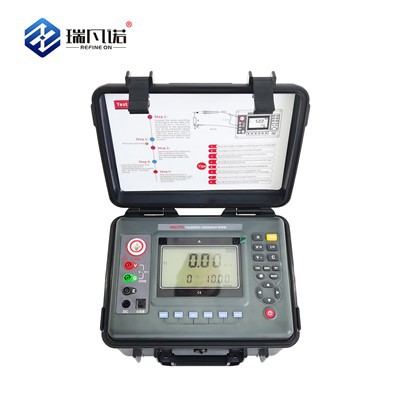
So, if you’re interested in learning more about our Secondary Injection Relay Test Sets and their phase accuracy, don’t hesitate to reach out. We’d love to have a chat with you, answer your questions, and discuss how our products can fit into your testing requirements. You can contact us to start a conversation about your procurement needs, and we’ll be happy to work with you to find the best solution for your business.
Transformer Tester References:
- Electrical Power System Protection textbooks
- Industry standards related to protective relay testing
Refine On (Hebei) Electric Power Technology Co., Ltd.
Address: Building 13, Liandong U Valley, No.64, Jing SAN South Street, Economic Development Zone, Mancheng District, Baoding City, China
E-mail: victor@transformer-test.com
WebSite: https://www.transformer-test.com/
