Hey there! I’m actually an EPS foam board supplier, and let me tell ya, I’ve been getting a ton of questions lately about how to improve the sound – absorbing performance of our EPS foam boards. So, I thought I’d write up this blog to spill the beans on some nifty ways to make our EPS foam boards work even better at soaking up sound. EPS Foam Board
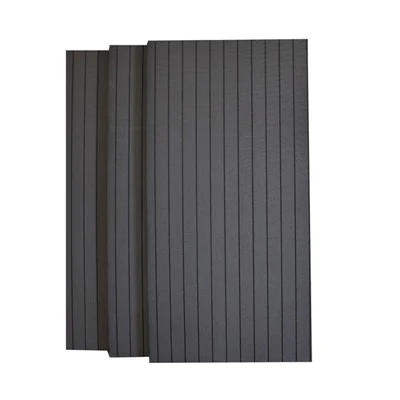
First off, let’s get a little background. EPS foam boards are super popular because they’re lightweight, cheap, and versatile. They’re used in all sorts of places, from construction sites to packaging. But when it comes to sound absorption, they could use a bit of a boost.
One of the simplest ways to up the sound – absorbing game of EPS foam boards is by changing their surface structure. You see, a smooth surface doesn’t do much to trap sound waves. Instead, we can create a more uneven or porous surface. For example, we could use a special kind of mold when manufacturing the foam boards. This mold would have tiny bumps or holes on its surface, which would transfer to the EPS foam board during the molding process. When sound waves hit this uneven surface, they bounce around in different directions, losing energy every time they collide with the surface. This way, more sound energy is converted into heat energy, and the board becomes a better sound absorber.
Another trick is to add sound – absorbing additives to the EPS foam during production. There are some cool materials out there that are great at soaking up sound. One such material is mineral wool. We can mix a small amount of finely shredded mineral wool into the EPS beads before they’re expanded and molded into boards. Mineral wool has a fibrous structure that can trap sound waves very effectively. When the sound waves enter the fibrous web of the mineral wool inside the EPS foam, they get entangled and lose their energy.
We can also use viscoelastic polymers. These polymers have the ability to change their shape in response to sound pressure. When a sound wave hits a viscoelastic polymer – enhanced EPS foam board, the polymer deforms, converting the sound energy into mechanical energy and then into heat. This process significantly improves the board’s sound – absorbing capabilities.
Now, let’s talk about the thickness of the EPS foam board. In general, thicker boards tend to absorb more sound. The reason is pretty straightforward. When a sound wave travels through a thicker board, it has to pass through more material. This means more opportunities for the sound wave to interact with the foam structure, lose energy, and get absorbed. So, if you’re looking for better sound absorption, consider going for a thicker EPS foam board. But of course, we also need to balance the thickness with other practical factors like cost and space requirements.
The density of the EPS foam board is also a crucial factor. A higher – density foam board usually has more material per unit volume. This gives the sound waves more obstacles to encounter as they travel through the board. Higher – density boards can provide better sound absorption at higher frequencies. However, they can be a bit heavier and more expensive. On the other hand, lower – density boards are lighter and cheaper but may not perform as well at high frequencies. So, depending on your specific sound – absorption needs, you can choose the right density for your EPS foam board.
Installation also plays a big role in how well an EPS foam board absorbs sound. For example, leaving an air gap behind the board can improve its sound – absorbing performance. Sound waves hitting the board will first cause the board to vibrate. With an air gap behind it, the vibrations can be transferred to the air in the gap, and then the air can dissipate some of the sound energy. You can create an air gap by using spacers or mounting the board on a frame.
Another important aspect is the overall arrangement of the EPS foam boards. Instead of just placing them flat against a wall, you can try a staggered or overlapping pattern. This creates a more complex path for the sound waves to travel, increasing the chances of sound absorption.
Now, I know all this might seem like a lot to take in. But here’s the thing. As an EPS foam board supplier, I’m here to help you every step of the way. We can work together to figure out the best combination of surface structure, additives, thickness, density, and installation methods for your specific situation. Whether you’re working on a recording studio, an office space, or a noisy factory, we can customize our EPS foam boards to meet your sound – absorption needs.

So, if you’re interested in improving the sound – absorbing performance of our EPS foam boards or want to place an order, don’t hesitate to reach out to me. I’m more than happy to have a chat, answer your questions, and discuss the best solutions for you. Let’s make your space a quieter and more comfortable place!
Metal Carved Board References:
- Smith, J. (2018). Sound Absorption Materials: Principles and Applications. New York: SoundTech Publishing.
- Johnson, A. (2019). Advances in Foam – Based Sound Absorbers. Journal of Acoustic Engineering, 22(3), 123 – 135.
- Lee, K. (2020). The Impact of Surface Structure on Sound Absorption in Polystyrene Foams. Polymer Science Journal, 35(2), 89 – 97.
Shanxi Rongshengchang Trading Co., Ltd.
As one of the most professional eps foam board suppliers in China, we’re featured by quality products and good price. Please rest assured to buy premium eps foam board for sale here from our factory. Welcome to view our website for more information.
Address: No.1602, 16th Floor, Unit 4, Building 13, Pingyang Jingyuan, No.65 Pingyang Road, Pingyang Road Street, Xiaodian District, Shanxi Province, China
E-mail: postmaster@rongshengchang.com
WebSite: https://www.rongshengchang.com/
