As an industrial robot supplier, I’ve witnessed firsthand the transformative power of these machines in modern manufacturing. The decision to invest in industrial robots is a significant one for any business. It involves a careful balance of costs and benefits, and a well – executed cost – benefit analysis is crucial. In this blog, I’ll explore several key cost – benefit analysis methods for industrial robot investment. Industrial Robot

1. Payback Period Analysis
The payback period is one of the simplest and most widely used methods in cost – benefit analysis. It calculates the time required for the investment in industrial robots to be recovered through the savings or additional revenues they generate.
To calculate the payback period, we first need to determine the total initial investment. This includes the cost of purchasing the robots, installation, programming, training for the operators, and any necessary modifications to the production facility. For example, if a company spends $500,000 on a set of industrial robots, including all associated costs, this is the initial investment.
Next, we need to estimate the annual net cash flow generated by the robots. This might come from increased production efficiency, reduced labor costs, and improved product quality. Suppose the robots are expected to save $100,000 per year in labor costs and generate an additional $50,000 in revenue due to increased production capacity. The annual net cash flow would be $150,000.
The payback period is then calculated by dividing the initial investment by the annual net cash flow. In our example, the payback period would be $500,000 / $150,000 ≈ 3.33 years. A shorter payback period is generally more favorable, as it indicates a quicker return on investment. However, this method does not take into account the time value of money, which means it does not consider that a dollar received in the future is worth less than a dollar received today.
2. Net Present Value (NPV) Analysis
The Net Present Value method addresses the limitation of the payback period by considering the time value of money. NPV calculates the present value of all future cash flows (both inflows and outflows) associated with the industrial robot investment, discounted at an appropriate rate.
The formula for NPV is:
[NPV=\sum_{t = 0}^{n}\frac{CF_{t}}{(1 + r)^{t}}]
where (CF_{t}) is the cash flow in period (t), (r) is the discount rate, and (n) is the number of periods.
Let’s assume we have the same initial investment of $500,000, and the annual net cash flows of $150,000 for the next 5 years. If we use a discount rate of 10% (which reflects the cost of capital or the minimum acceptable rate of return), we can calculate the NPV as follows:
The initial investment ((CF_{0})) is – $500,000. For (t = 1) to (t=5), (CF_{t}=150,000).
[NPV=- 500000+\frac{150000}{(1 + 0.1)^{1}}+\frac{150000}{(1 + 0.1)^{2}}+\frac{150000}{(1 + 0.1)^{3}}+\frac{150000}{(1 + 0.1)^{4}}+\frac{150000}{(1 + 0.1)^{5}}]
[NPV=-500000 + 150000\times(0.9091 + 0.8264+0.7513 + 0.6830+0.6209)]
[NPV=-500000+150000\times3.7907]
[NPV=-500000 + 568605]
[NPV = 68605]
A positive NPV indicates that the investment is expected to generate more value than its cost, taking into account the time value of money. A negative NPV suggests that the investment may not be worthwhile.
3. Internal Rate of Return (IRR) Analysis
The Internal Rate of Return is the discount rate at which the NPV of an investment is equal to zero. In other words, it is the rate of return that the investment is expected to earn over its lifetime.
To calculate the IRR, we can use a financial calculator or software. Using the same cash flows as in the NPV example, we set the NPV formula equal to zero and solve for (r):
[0=-500000+\frac{150000}{(1 + IRR)^{1}}+\frac{150000}{(1 + IRR)^{2}}+\frac{150000}{(1 + IRR)^{3}}+\frac{150000}{(1 + IRR)^{4}}+\frac{150000}{(1 + IRR)^{5}}]
Using a financial calculator or software, we find that the IRR is approximately 15.2%.
The decision rule for IRR is to accept the investment if the IRR is greater than the company’s required rate of return. In this case, if the company’s required rate of return is 10%, the investment is considered acceptable.
4. Cost – Utility Analysis
In addition to the traditional financial analysis methods, cost – utility analysis can be useful when evaluating industrial robot investments. This method takes into account non – financial benefits, such as improved product quality, increased flexibility in production, and enhanced worker safety.
For example, industrial robots can perform repetitive tasks with high precision, leading to a reduction in product defects. This can improve customer satisfaction and brand reputation, which may not be easily quantifiable in monetary terms. To conduct a cost – utility analysis, we need to assign a value to these non – financial benefits.
One way to do this is through a multi – criteria decision – making approach. We can define a set of criteria, such as product quality improvement, production flexibility, and worker safety, and assign weights to each criterion based on their relative importance. Then, we can evaluate different robot investment options based on these criteria and calculate a utility score for each option.
5. Sensitivity Analysis
Sensitivity analysis is an important part of the cost – benefit analysis process. It helps us understand how changes in key variables, such as the initial investment, annual net cash flows, and discount rate, can affect the results of the analysis.
For example, if the cost of purchasing the robots increases by 10%, how will it impact the payback period, NPV, and IRR? By conducting sensitivity analysis, we can identify the most critical variables and assess the risk associated with the investment.
Let’s assume that in our previous example, the initial investment increases from $500,000 to $550,000. The payback period would then be $550,000 / $150,000 ≈ 3.67 years. The NPV and IRR would also change accordingly.
Conclusion
Investing in industrial robots can bring numerous benefits to a manufacturing company, including increased efficiency, improved quality, and reduced costs. However, it is essential to conduct a thorough cost – benefit analysis using multiple methods to make an informed decision.
The payback period provides a simple measure of how quickly the investment can be recovered, while NPV and IRR take into account the time value of money. Cost – utility analysis helps incorporate non – financial benefits, and sensitivity analysis assesses the risk associated with the investment.
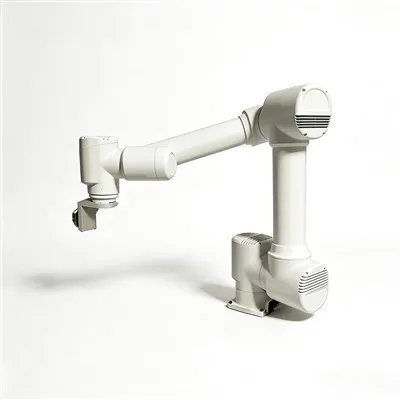
If you are considering an investment in industrial robots, I encourage you to reach out to us for a detailed consultation. Our team of experts can help you conduct a comprehensive cost – benefit analysis tailored to your specific business needs and goals. We can also provide you with information on our wide range of industrial robot solutions, including their features, performance, and pricing.
Collaborative Welding Robot Don’t miss out on the opportunity to transform your manufacturing operations with our high – quality industrial robots. Contact us today to start the conversation and explore how our products can help you achieve greater efficiency and competitiveness in the market.
References
- Brealey, R. A., Myers, S. C., & Allen, F. (2020). Principles of Corporate Finance. McGraw – Hill Education.
- Park, C. S. (2016). Fundamentals of Engineering Economics. Pearson.
- Triantis, A. J. (2018). Real Options: Evaluating Strategic Investment in an Uncertain World. MIT Press.
Xinweilai Intelligent Technology (Shandong) Co., Ltd.
As one of the most professional industrial robot manufacturers and suppliers in China, we’re featured by quality products and good service. Please rest assured to wholesale bulk customized industrial robot from our factory. For pricelist and quotation, contact us now.
Address: Jinghua Road, Economic and Technical Development Zone, Dezhou City, Shandong Province
E-mail: liujiqing@xinweilaiznkj.com
WebSite: https://www.xinweilaiznkj.com/
