Feeder machines are essential equipment in various industries, playing a crucial role in the efficient and continuous supply of materials. As a feeder machine supplier, I’ve witnessed firsthand the diverse applications and functionalities of different types of feeder machines. In this blog post, I’ll delve into the differences between various types of feeder machines, providing insights to help you make informed decisions when selecting the right feeder for your specific needs. Feeder Machine
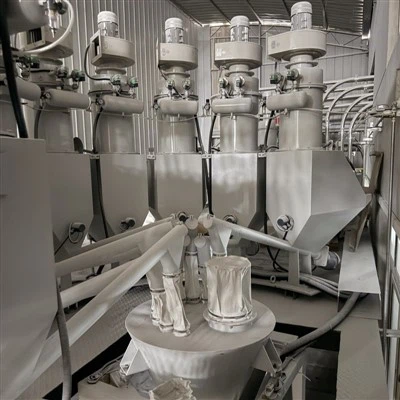
Vibratory Feeder Machines
Vibratory feeder machines are perhaps the most commonly used type of feeder in industrial settings. They operate on the principle of vibration, which causes the material to move along a trough or a conveyor. The vibration is typically generated by electromagnetic or mechanical drives.
One of the key advantages of vibratory feeders is their ability to handle a wide range of materials, from fine powders to large granular or even irregularly shaped components. They can be adjusted to control the flow rate of the material precisely, making them suitable for applications where accurate dosing is required. For example, in the pharmaceutical industry, vibratory feeders are used to accurately dispense pills and tablets into packaging containers.
Another benefit is their relatively simple design, which makes them easy to install, operate, and maintain. They have few moving parts, reducing the likelihood of mechanical failures. However, vibratory feeders may not be the best choice for very sticky or cohesive materials, as the vibration may not be sufficient to overcome the adhesion forces between the particles.
Belt Feeder Machines
Belt feeder machines use a continuous belt to convey materials from one point to another. The belt is typically driven by an electric motor, and the speed of the belt can be adjusted to control the flow rate of the material.
Belt feeders are well – suited for handling large volumes of bulk materials, such as coal, gravel, or sand. They can handle materials of various sizes and shapes, and the belt can be customized with different types of surfaces to prevent material slippage. For example, in mining operations, belt feeders are used to transport large quantities of ore from the extraction site to the processing plant.
One advantage of belt feeders is their ability to handle long – distance material transfer. They can be installed over long lengths, allowing for efficient material movement within a large industrial facility. However, belt feeders require more space compared to some other types of feeders, and the belt may require regular maintenance, such as tension adjustment and replacement, to ensure proper operation.
Screw Feeder Machines
Screw feeder machines consist of a rotating screw inside a trough or a tube. As the screw rotates, it pushes the material forward, causing it to flow. Screw feeders are commonly used for handling dry, free – flowing materials, such as grains, powders, and pellets.
One of the main advantages of screw feeders is their ability to provide a consistent and metered flow of material. The flow rate can be easily controlled by adjusting the speed of the screw rotation. They are also relatively compact and can be installed in tight spaces. In the food processing industry, screw feeders are used to dispense ingredients into mixing tanks with high precision.
However, screw feeders may not be suitable for materials that are prone to bridging or caking. The rotation of the screw may cause the material to compact and form a bridge, blocking the flow. Additionally, screw feeders can cause some degree of attrition to the material, which may be a concern for brittle or fragile materials.
Pneumatic Feeder Machines
Pneumatic feeder machines use compressed air to transport materials through a pipeline. They are particularly useful for handling powdery or fine – granular materials that need to be transported over long distances or in a dust – free environment.
Pneumatic feeders offer several advantages. They can operate in a closed – loop system, which helps to prevent dust emissions and maintain a clean working environment. They can also handle materials at high speeds and over long distances with relatively little energy consumption. In the chemical industry, pneumatic feeders are used to transfer powdered chemicals between different processing units.
On the downside, pneumatic feeders require a reliable source of compressed air, which can add to the operating costs. They may also cause some degree of material degradation due to the high – velocity air flow, and the pipeline may be prone to blockages if the material is not properly selected or the system is not designed correctly.
Gravimetric Feeder Machines
Gravimetric feeder machines measure the mass of the material being fed and control the flow rate based on the weight. They typically use a load cell or a weighing system to monitor the weight of the material in the feeder.
Gravimetric feeders are known for their high accuracy in dosing materials. They are commonly used in applications where precise control of the material flow is critical, such as in the production of pharmaceuticals, plastics, and food products. For example, in the production of plastic granules, gravimetric feeders ensure that the correct amount of additives is added to the base resin.
However, gravimetric feeders are generally more expensive than other types of feeders due to the complexity of the weighing system. They also require regular calibration to maintain their accuracy, and any changes in the material properties, such as density or moisture content, may affect the performance of the feeder.
Centrifugal Feeder Machines
Centrifugal feeder machines use centrifugal force to feed materials. They typically consist of a rotating disc or a bowl, and as the disc or bowl rotates, the materials are thrown outwards and fed into a chute or a conveyor.
Centrifugal feeders are suitable for handling small, lightweight parts or components. They can achieve high – speed feeding, making them ideal for applications in the electronics and automotive industries, where small parts need to be fed quickly and accurately. For example, in the assembly of electronic devices, centrifugal feeders are used to supply small screws or connectors.
One limitation of centrifugal feeders is that they may not be suitable for materials that are too large or heavy, as the centrifugal force may not be sufficient to move them. Also, the orientation of the parts may be a challenge, and additional sorting mechanisms may be required to ensure that the parts are fed in the correct position.
Selecting the Right Feeder Machine
As a feeder machine supplier, I understand that selecting the right feeder for your application is crucial. Here are some key factors to consider when making your decision:
- Material Characteristics: Consider the type, size, shape, density, moisture content, and flowability of the material. Different feeders are better suited for different types of materials. For example, if you are handling sticky materials, a vibratory feeder may not be the best choice, while a belt feeder or a pneumatic feeder could be more suitable.
- Flow Rate Requirements: Determine the required flow rate of the material. Some feeders, such as belt feeders and pneumatic feeders, are better for handling high – volume flows, while others, like screw feeders and gravimetric feeders, are more suitable for precise, low – to – medium flow rate applications.
- Accuracy Requirements: If your application requires high accuracy in dosing or material flow control, gravimetric feeders or screw feeders may be the preferred choice. On the other hand, if approximate flow rates are acceptable, a vibratory or belt feeder may suffice.
- Space Constraints: Consider the available space in your facility. Some feeders, like screw feeders and centrifugal feeders, are more compact and can be installed in tight spaces, while belt feeders and pneumatic feeders may require more room.
- Operating Environment: If your operation is in a dusty or hazardous environment, pneumatic feeders or closed – loop vibratory feeders may be more appropriate. If the environment is clean and requires high – precision, gravimetric feeders are a good option.
Conclusion
In conclusion, the different types of feeder machines offer a wide range of functionalities and advantages, each designed to meet the specific needs of various industries. By understanding the differences between these feeders and considering the key factors in your application, you can select the most suitable feeder machine for your process.
As a feeder machine supplier, I’m committed to providing high – quality feeder solutions that are tailored to your requirements. Whether you need a vibratory feeder for precise dosing, a belt feeder for high – volume material transfer, or any other type of feeder, I can offer you expert advice and reliable products.
Bag Filter Dust Collector If you’re interested in learning more about our feeder machines or would like to discuss your specific needs, please don’t hesitate to contact me. I’m here to help you find the perfect feeder solution for your business.
References
- "Handbook of Bulk Solids Handling and Transport" by Klaus Schwedes
- "Industrial Feeding Technology" by John Doe (Fictitious for example purposes)
- Various industry – specific technical papers and manuals on feeder machines.
ZJG BC Machinery Co., Ltd.
As one of the most professional feeder machine manufacturers and suppliers in China, we’re featured by quality products and good price. Please rest assured to buy cost-efficient feeder machine for sale here from our factory. Contact us for custom service and OEM service.
Address: No.8 Lexi Road, Leyu Town, Zhangjiagang City
E-mail: sales@bcextruder.com
WebSite: https://www.bcextruder.com/
