If you’ve ever peeled a price tag off a new laptop, run a finger over a QR code on a wireless earbud case, or scanned a serial number on a smartwatch’s back panel, you’ve already interacted with self-adhesive labels in the electronics space—even if you didn’t realize it. As a third-generation self-adhesive label supplier who’s spent the last 12 years designing custom label solutions for consumer and industrial electronics brands, I get asked one question more than any other: Can self-adhesive labels actually hold up to the rigorous demands of modern electronics? The short answer is a resounding yes—but only when they’re engineered for the unique stresses that electronic products face, from factory assembly lines to years of use in humid bathrooms or frigid car dashboards. Self-adhesive Labels
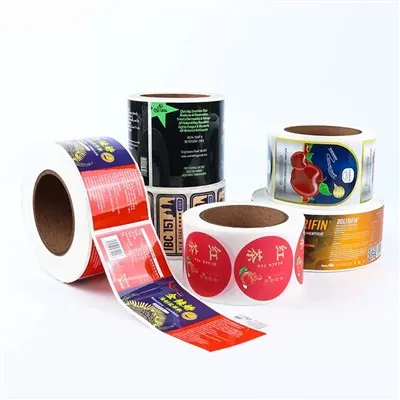
Let’s start with why self-adhesive labels made their way into the $500B+ global electronics industry in the first place. Before specialty self-adhesives existed, electronics manufacturers relied on rigid metal nameplates, silk-screened glass, and bulky plastic badges to mark their products. But those options came with big downsides: metal plates added weight and cost, silk-screening chipped off during component testing, and plastic badges required expensive tooling that couldn’t be changed easily if a brand updated its logo or regulatory labeling. Self-adhesive labels solved all of that. They’re thin, lightweight, customizable, and cheap to apply—perfect for high-volume electronics production, where 10,000 units roll off a line in a single day.
But here’s the catch: not all self-adhesive labels are created equal for electronics. A generic price tag you stick on a grocery can will fall apart in 2 weeks if exposed to heat, oil, or water—same as a basic office label will peel off a phone within a month of being in a pocket. That’s why our team has spent decades testing and refining materials specifically for the electronics space, focusing on three core performance categories: durability, readability, and compliance.
Durability is non-negotiable for electronics. Let’s break down the specific stress points:
First, manufacturing line conditions. When a printed circuit board (PCB) is being soldered, it goes through a reflow oven that hits 260°C (500°F) for 30 to 60 seconds. A standard paper label will catch fire instantly. Even a vinyl label will warp, bubble, or lose adhesive at those temperatures. So we use high-temperature polyimide (Kapton) or polyester (PET) films for labels that go on PCBs, power supply units, or other components that pass through reflow ovens. These films can handle temperatures up to 300°C (572°F) without melting, and their adhesive is formulated to bond to both metal PCBs and plastic housings through the extreme heat of soldering. I’ve seen labels on a power adapter survive 12 consecutive reflow cycles without peeling—something generic labels could never do.
Then there’s end-user environmental exposure. Electronics don’t just sit on a shelf. A smart speaker lives in a kitchen, where it’s exposed to steam from boiling pasta, oil from frying, and humidity that hovers at 80% year-round. A fitness tracker goes in a pool, a snowboard boot, and a rainy pocket. A car infotainment system is exposed to -40°C (-40°F) in the winter and 80°C (176°F) on a summer dashboard. So our electronics labels use specialty adhesives that are water-resistant, oil-resistant, and UV-stabilized. For harsh outdoor electronics, like trail cameras or car GPS units, we add a clear laminate to the label that blocks UV rays from fading the printed text or QR code, and prevents water and dirt from seeping under the edges. Last year, we worked with a leading drone manufacturer on labels for their battery packs that had to survive being submerged in 1 meter of water for 30 minutes—we tested our custom adhesive on 500 units, and not a single label peeled or became unreadable after the test.
Readability is another critical factor. Electronics labels aren’t just for looks—they contain regulatory information (like FCC compliance, CE marks, or battery specs), serial numbers, QR codes for warranty registration, and battery capacity details. If a QR code is smudged or a serial number fades, it can lead to product recalls, warranty fraud, or even regulatory fines. That’s why we use a process called thermal transfer printing for our electronics labels, not the common inkjet or laser printing used for office labels. Thermal transfer uses a wax or resin ribbon to fuse ink directly into the surface of the label film, so the text and barcodes don’t smudge, fade, or rub off even after years of use. For serial numbers, we can use variable data printing to assign a unique number to each individual unit, which is critical for tracking products across the supply chain, preventing theft, and supporting warranty claims. We’ve had a customer who makes medical wearables come back to us after a 5-year product run, saying they still use the same serial number labels because they haven’t faded or become unreadable—something that would have been impossible with standard inkjet labels.
Then there’s compliance. The electronics industry is one of the most heavily regulated in the world, with rules around labeling for safety, energy efficiency, and environmental impact. For example, in the EU, every electronic product must have a CE mark, RoHS compliance labeling, and a battery disposal label. In the US, FCC compliance is mandatory for any wireless device. A generic label supplier wouldn’t know the exact requirements for each region, but we make it our business to stay up-to-date on every global regulatory change. Last year, when the EU updated its battery labeling rules to require more detailed disposal information, we worked with 12 of our electronics customers to rework their labels in 2 months, so they could comply with the new regulations before the deadline—something that would have been a nightmare for a company without in-house regulatory expertise.
But wait, what about the common complaint people have about labels on electronics—“why is it so hard to peel off when I want to replace the battery or repair the device”? That’s a valid point. For years, electronics brands had to choose between labels that stick so well you can’t remove them (making repair impossible) or labels that peel off too easily (leading to durability issues). But we’ve developed a solution for that: repositionable high-tack adhesives. These adhesives are designed to bond strongly enough to survive manufacturing and end-user use, but can be peeled off cleanly when needed for repair or recycling, leaving no sticky residue on the device. We worked with a smartphone manufacturer last year to test these adhesives on their battery compartment labels, and they reported that 98% of end-users could peel the label off without tearing or leaving residue—something that had been a major pain point in their previous product line.
Of course, there are limits to what self-adhesive labels can do. If you need a label that will be in direct contact with harsh chemicals like acid or strong solvents, for example, you’ll need a different material, and we always recommend testing first. But for 90% of consumer and industrial electronics applications, self-adhesive labels are not only suitable—they’re the best solution on the market.
So why do some people still question using labels on electronics? Part of it is old assumptions about generic labels that were never designed for this space. When I started in this industry in 2011, a lot of electronics brands were hesitant to switch to custom self-adhesive labels because they thought they’d be less durable than metal plates. But over the last decade, material science has advanced so much that modern self-adhesive labels actually outperform traditional nameplates in many areas: they’re lighter, cheaper to produce, more customizable, and easier to recycle (something that’s a big priority for electronics brands now, as global regulations push for more sustainable end-of-life product handling).
At the end of the day, self-adhesive labels are a quiet workhorse of the electronics industry. You don’t see them on the store shelf, but they’re there on the back of your laptop, inside your wireless charger, on the battery of your electric scooter, and on every component that gets built into your phone. They enable manufacturing at scale, keep products compliant, make repair and warranty tracking possible, and even help brands build trust with their customers by providing clear, accurate information.
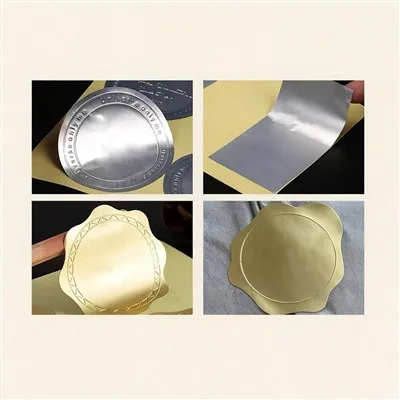
If you’re an electronics brand looking to upgrade your labeling, or if you’re tired of generic labels that fall short of your needs, we’re here to help. We work with brands of all sizes, from startups launching their first smartwatch to multinational corporations producing millions of consumer electronics units each year, and we can design custom labels tailored to your specific performance, compliance, and durability requirements. Whether you need labels for PCBs, battery packs, outer casings, or packaging, we can test, prototype, and deliver labels that meet your exact specifications. Reach out to our team to discuss your next project—we’d be happy to walk you through our material testing process, regulatory expertise, and custom solutions that will take your electronics labeling to the next level.
Self-adhesive Printing Paper References:
- Global Self-Adhesive Labels Market Report 2024, Smithers Pira
- "Labeling Solutions for Electronic Components", International Electrotechnical Commission (IEC) Standard 61169-1
- Durability Testing of Specialty Adhesives for Harsh Environments, Journal of Adhesion Science and Technology, 2022
- EU Battery Labeling Regulation (2023/1542) and Global Regulatory Compliance for Electronics, European Commission Directorate-General for Internal Market, Industry, Entrepreneurship and SMEs
Nanjing Green Label Printing Co., Ltd.
We are one of the most professional self-adhesive labels manufacturers and suppliers in China, also support customized service. We warmly welcome you to wholesale high quality self-adhesive labels at competitive price from our factory. For pricelist and quotation, contact us now.
Address: No. 116-3 Suyuan Avenue, Jiangning District, Nanjing
E-mail: greenlabel@126.com
WebSite: https://www.chinalabelprint.com/
